7 Best Shrinkwrap Machines for Global Buyers in 2026
Shrinkwrap machines look straightforward until a line stops. Film wrinkles, seals split, or a package exits the tunnel with uneven tension. For global buyers, the right choice depends on more than rated speed. Product dimensions, film compatibility, changeover time, local service, and operator training all shape performance after installation.
Market figures offer useful context, but they need careful interpretation. PMMI’s 2024 State of the Industry report estimates U.S. packaging machinery shipments at approximately $10.9 billion in 2023. This figure covers packaging machinery broadly, not shrink wrappers alone. The OECD’s Global Plastics Outlook (2022) identifies packaging as a major source of plastic waste. That makes film use and package design relevant evaluation points, alongside throughput and seal quality. Small details count.
This guide compares seven machines for buyers weighing different production needs and budgets. It considers practical factors such as pack size, line speed, controls, energy use, and access to spare parts. A fast machine is not automatically the best fit. A compact unit may suit a small batch line, while a continuous system may serve higher-volume production. Specifications can also look better on paper than they perform during frequent changeovers. That deserves scrutiny. The comparisons are a starting point, not a substitute for testing samples with your own products and film.
How Shrinkwrap Machines Seal Film and Use Heat to Form a Tight Pack
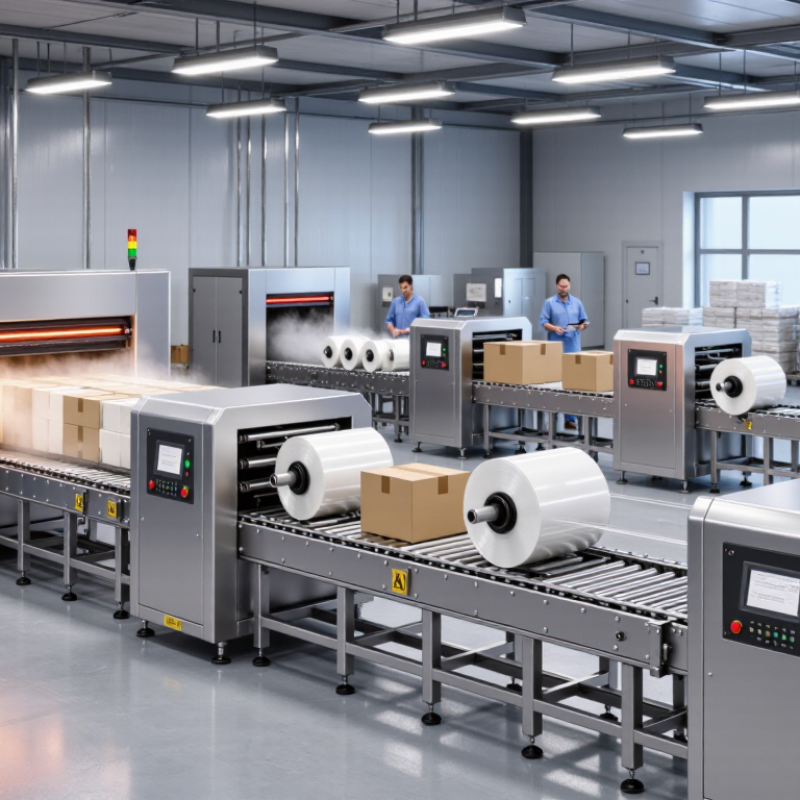
Shrink wrapping uses two related actions: sealing and shrinking.
The machine first positions film around a product or grouped items. A heated seal bar presses the overlapping film edges together, creating a closed seam. Pressure, dwell time, and temperature all affect that seam. Too little heat may leave gaps; too much can cause wrinkles or burn marks. Small details matter.
The sealed pack then passes through a heat tunnel or enters a shrink chamber. Warm air softens the film, which contracts around the product as it cools. A carton’s sharp corners may need extra clearance, while bottles can shift if the conveyor moves too quickly. There is no magic temperature. Film type, thickness, package shape, and line speed all change the settings, so operators should test actual products before full production.
A useful trial checks more than appearance. Inspect the seam for openings, pull gently at its edges, and look for punctures after cooling. Record the settings that worked, but expect adjustments when film rolls or package sizes change. That part can be frustrating. For global buyers, confirm the machine’s electrical supply, guarding, and operating instructions match the intended site. A tight pack is useful only when the process is repeatable and safe.
Which Machine Types Match Product Size, Film, and Output Requirements?
The right shrinkwrap machine depends on the product’s dimensions, film, and required pace. An L-bar sealer with a heat tunnel suits boxed goods and mixed product sizes at moderate volumes. For long items or bundled products, a side-seal or sleeve system can create a continuous, neat wrap. Small batches may need only a chamber machine, while steady production often benefits from automatic feeding and sealing.
Measure the largest product, including any tray or bundle.
Tips: Test the exact film on real products. Polyolefin works well for many retail packs; thicker polyethylene is common for larger bundles. Check the finished seal, corner folds, and clarity after shrinking. A fast machine is not useful if film jams or packages distort.
Match the machine’s opening and sealing length to your biggest pack, then compare that with your normal output per hour. Leave room for operators to load products and remove finished packs. Ask suppliers for sample runs using your product and preferred film, and inspect results at normal line speed. This step takes time, but catalogue figures can be optimistic.
Consider changeover time, too: frequent shifts between product sizes may make a simpler machine more practical than a faster, complex line.
How to Compare 7 Leading Machines by Packs per Minute, Seal Size, and Load
Compare the seven machines on three numbers: packs per minute, seal dimensions, and allowable load. PMMI’s 2023 State of the Industry report put U.S. packaging machinery shipments at about $10.9 billion in 2022, with projected annual growth of 4.7% through 2027. That figure covers packaging machinery broadly, not shrinkwrap equipment alone, but it signals a market where capacity claims deserve careful checking.
Speed figures need context. Ask whether each quoted rate was measured with your product, film, and pack pattern. A machine rated for 30 packs per minute may slow when operators align uneven cartons or change formats. Seal size matters, too: compare jaw length and width with your largest pack, then allow room for reliable film overlap. Small details matter. For a fair comparison, record changeover time and reject rate during a short production trial.
Load means more than the product’s weight. Check the conveyor’s rated load and maximum package dimensions, especially for dense multipacks. A narrow seal bar may suit small cartons but force awkward rotations on wide bundles. It is tempting to rank by speed; that can be misleading. A slower unit with stable seals and fewer stoppages may deliver more saleable packs per shift. Keep the test notes beside each machine’s specification sheet; brochures rarely show the whole setup.
How ASTM D882 Covers Film Below 1.0 mm and ASTM F88 Tests Seal Strength
Shrinkwrap buyers should test film and seals separately. ASTM D882 covers thin plastic sheeting below 1.0 mm thick. It measures tensile properties such as strength and elongation, not seal quality. A 60-micron film may stretch differently in the machine and cross directions. Test both when film orientation or tearing matters. ASTM D882’s published method emphasizes controlled specimen dimensions and test conditions; otherwise, two suppliers’ results may not be comparable. Small details matter.
ASTM F88/F88M measures the force needed to separate a flexible-package seal, reported relative to seal width. The method also distinguishes failure modes, such as film tearing or seal separation. For a shrinkwrap line, compare samples taken across the seal and from repeated runs, not just one attractive average. A strong seal is not automatically leakproof. ASTM F88 does not establish package integrity by itself. A crooked seal can also distort results. That is easy to overlook. These ASTM methods offer measurable checks, but buyers still need to test the actual film, settings, and finished pack together.
How Global Buyers Check Power Compatibility, Safety Standards, Service, and Cost
Global buyers should verify a shrinkwrapper’s electrical specification before comparing prices.
Voltage, phase, frequency, heater load, and control-circuit requirements must match the installation site. A machine that needs a transformer or rewiring can quickly erase an apparent discount.
Small mismatches matter.
The IEA’s Tracking Industry 2023 report estimates that industry uses about 37% of global energy, making heater efficiency and standby consumption worth checking—not just motor ratings. Ask suppliers for measured power data under realistic operating conditions; brochure figures may reflect ideal settings.
Safety review should cover guarding, emergency stops, interlocks, and electrical documentation. IEC 60204-1 addresses electrical equipment on machinery, while ISO 13849-1 covers safety-related control systems; buyers still need to confirm applicable local requirements.
Paper compliance is not enough.
Request manuals, wiring diagrams, risk-assessment records, and evidence that the delivered configuration matches the documents. Service deserves the same scrutiny: clarify response times, remote diagnostics, technician coverage, and spare-part lead times.
Downtime gets expensive.
Compare total ownership cost, including film waste, energy, maintenance, shipping, and operator training. I would also ask for a sample run using the buyer’s actual product and film. It takes time, and it can expose awkward setup issues a polished demonstration misses.