Why Use Pallet Stretch Wrap Film?
Why Use Pallet Stretch Wrap Film?
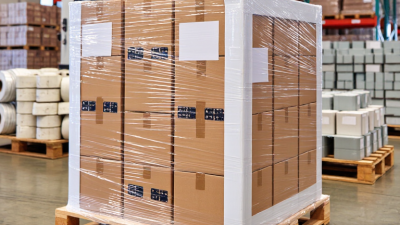
Pallet Stretch Wrap Film helps keep cartons aligned during storage, loading, and transportation. Its elastic tension presses products into one stable unit. This reduces shifting, leaning, and exposed carton edges. A properly wrapped pallet can move more safely through forklifts, conveyors, and delivery vehicles.
Packaging expert Dr. Jay Singh of Cal Poly Pomona has observed, “Load stability depends on controlled movement, not simply on using more film.” That principle matters on busy warehouse floors. Operators should consider pallet weight, carton shape, film thickness, pre-stretch, and wrapping speed. A square pallet may need a different wrapping pattern than a tall, narrow load. Film should grip the products without crushing them. The bottom layers need firm containment. The top should remain secure, but not overly tight.
I have seen loose cartons slide after only a short truck journey. More film did not automatically solve the problem. Poor tension and weak corner support were the real causes. This is where practical testing becomes valuable. Check the wrapped pallet after vibration, handling, and temperature changes. Look for gaps, torn film, leaning cartons, or hidden compression damage.
The best solution is not always the thickest film. It is the right film, applied consistently. Pallet Stretch Wrap Film can reduce product loss, improve handling efficiency, and create a cleaner warehouse process. Still, every operation has limitations. Film selection should be reviewed regularly, especially when products, equipment, or shipping conditions change.

Pallet Stretch Wrap Film: Structure, Materials, and 200–300% Pre-Stretch
Why Use Pallet Stretch Wrap Film?
Pallet stretch wrap film is more than clear plastic around a load. Its structure controls how the pallet survives handling, vibration, and temperature changes. Most industrial films use co-extruded linear low-density polyethylene, or LLDPE. Several layers can combine puncture resistance, cling, and controlled tear strength. The outer surface may slide smoothly, while the inner surface grips cartons. Small details matter near sharp pallet corners.
Pre-stretch changes the economics. In common packaging language, 200% pre-stretch means the film reaches three times its original length. At 300%, it can reach four times its starting length. A 100-metre roll could theoretically cover 300 to 400 metres. Real results are lower because of heat, machine settings, and uneven loads. That gap is often ignored.
Grand View Research estimated the global stretch film market at about 3.1 billion US dollars in 2023, with continued growth expected through 2030. Its analysis connects demand with material reduction and automated packaging. Smithers also identifies downgauging and efficient pre-stretching as important industry directions. These figures support investment, but they do not guarantee savings. A thin 200–300% pre-stretched film can fail when containment force is poorly measured. I have seen loose cartons move despite attractive film usage numbers. ASTM D4649 guidance recommends evaluating film selection and application conditions, not thickness alone. Measure load stability, film tension, and corner damage on the actual pallet. Sometimes the cheaper-looking setting is the expensive mistake.
Why Use Pallet Stretch Wrap Film?
Structure, Materials, and 200–300% Pre-Stretch
Pallet stretch wrap film is commonly made from linear low-density polyethylene (LLDPE), often using multilayer structures to balance puncture resistance, cling, strength, and load retention. Pre-stretch expresses how far the film can be extended before it is applied to a pallet. Machine-applied high-performance films commonly operate in the 200–300% pre-stretch range, helping reduce film consumption while maintaining load stability.
How Stretch Wrap Improves Load Stability Under ASTM D4649 Testing
Why Use Pallet Stretch Wrap Film?
Pallet stretch wrap film helps hold cartons together during handling, storage, and transport. Its main value is controlled containment force around the entire load. When an evaluation follows ASTM D4649 guidance, technicians examine film selection, application, and load behavior under realistic conditions. A properly wrapped pallet resists sliding, leaning, and carton separation. The film also creates a visible layer around unstable edges.
In practical testing, operators may record film gauge, stretch percentage, wrapping pattern, and load movement. They can compare a wrapped pallet before and after vibration or handling exposure. A trained evaluator watches for loose layers, torn corners, and shifting boxes. Film gauge matters. Too much stretch can weaken the film. Too little stretch can waste material and reduce containment. A careful application setting keeps the load firm without crushing soft cartons.
The pallet itself affects results. Uneven weight distribution, dusty surfaces, and damaged boxes can reduce stability, even with good film. One weakness remains: laboratory conditions rarely copy every warehouse route. Humidity, temperature, forklift impacts, and long storage periods may change performance. For reliable decisions, testing should reflect the actual load, wrapping equipment, and distribution environment. Measurements should be recorded clearly, then reviewed against observed damage and movement.
Moisture, Dust, and Puncture Protection Across Common Film Gauges
Why Use Pallet Stretch Wrap Film?
Moisture, dust, and puncture damage can begin during a short warehouse transfer. Stretch wrap creates a continuous outer layer around cartons, bags, and mixed loads. It helps reduce dust entry and limits brief exposure to splashes or humid air. It is not a waterproof container. That distinction matters.
A useful gauge choice depends on load weight, corner sharpness, and transport distance. Common 60–80 gauge films suit stable, light-to-medium pallets. Heavier loads or rough edges may require 90–120 gauge material. Thicker is not automatically better. Excess film can increase cost without improving containment. A 2024 Smithers market outlook projects the global stretch and shrink film market to grow by about 4% annually through 2028, reflecting continued demand for efficient load protection.
Puncture resistance also depends on film structure, pre-stretch, and wrapping tension. A thin, well-engineered film may outperform a thicker film applied poorly. Operators should check corner tears, loose tails, and film breaks after wrapping. The Flexible Packaging Association’s 2024 industry report places U.S. flexible packaging sales at roughly 40 billion dollars in 2023, showing the sector’s scale and operational importance. Still, pallet performance can vary sharply between warehouses. Humidity, cold storage, and uneven stacking are easy to underestimate. A small trial with actual loads is often more reliable than choosing a gauge from a chart.
Material Efficiency: Reducing Film Consumption Through Pre-Stretch Technology
Pallet stretch wrap is often treated as a cheap consumable. It is not. Pre-stretch technology elongates film before application, allowing each rotation to cover more pallet surface with less resin. Smithers’ industry report, The Future of Stretch and Shrink Films to 2028, identifies pre-stretching and downgauging as important routes to material efficiency. In practice, film stretched to around 250% may replace heavier wrapping patterns, when the load is stable and the machine is calibrated correctly. That condition matters. Poor tension can waste film and weaken corner protection.
Eurostat’s Packaging Waste Statistics 2022 recorded 186.5 kilograms of packaging waste per person in the European Union. Plastic packaging waste represented 36.1 kilograms per person. These figures make small warehouse savings more meaningful. A practical audit should weigh film used per pallet, record the number of wraps, and test containment force. WRAP’s resource-efficiency guidance also supports measuring packaging performance, rather than judging success by roll length alone. A 40% reduction in film weight may be realistic in some operations, but not universal. Irregular loads, sharp edges, and long transport routes can change the result. The calculation is rarely perfect. A short line trial reveals more than a supplier estimate. Teams should compare damaged pallets, film breaks, and rejected loads before changing the standard setting.
Why Use Pallet Stretch Wrap Film? - Material Efficiency: Reducing Film Consumption Through Pre-Stretch Technology
Illustrative operating comparison for a standard pallet-wrapping application. Actual results vary with pallet geometry, load stability, film properties, wrapping pattern, and machine settings.
| Data Dimension |
Conventional Stretch Film |
Pre-Stretch Film System |
Difference / Calculation |
| Material and Application Parameters |
| Nominal film thickness |
23 micrometres (µm) |
17 micrometres (µm) |
6 µm thinner film in the modeled application |
| Film elongation during application |
Approximately 50% |
Approximately 200% |
Pre-stretch equipment elongates the film before it reaches the load |
| Film applied per pallet |
250 g |
170 g |
80 g less film per pallet |
| Wrap coverage and containment target |
Same modeled coverage and containment target |
Same modeled coverage and containment target |
Comparison is based on equivalent application requirements |
| Material reduction per pallet |
Baseline: 0% |
32.0% |
Calculation: (250 g − 170 g) ÷ 250 g × 100 |
| Monthly Consumption Scenario |
| Pallets wrapped per month |
1,000 pallets |
1,000 pallets |
Same monthly throughput |
| Monthly film consumption |
250 kg |
170 kg |
80 kg less film per month |
| Annual film consumption |
3,000 kg |
2,040 kg |
960 kg less film per year |
| Annualized material reduction |
Baseline: 0% |
32.0% |
Based on 12 months of the stated operating volume |
| Operational Efficiency Indicators |
| Film required for 10,000 pallets |
2,500 kg |
1,700 kg |
800 kg less film for the same pallet count |
| Potential storage volume requirement |
Higher, due to greater film mass required |
Lower, due to reduced film consumption |
Actual space savings depend on roll dimensions and packaging |
| Primary efficiency mechanism |
Film is stretched mainly during manual or machine application |
Film is mechanically elongated before application |
Controlled pre-stretch can improve material utilization and consistency |
| Key performance control |
Wrapping force, overlap, and film tension |
Pre-stretch ratio, wrapping force, overlap, and film tension |
Settings should be validated through load-containment testing |
Calculation basis: The table uses a modeled application of 1,000 pallets per month, with 250 g of conventional film or 170 g of pre-stretched film applied per pallet. The 32.0% reduction is calculated from film mass only and does not represent a universal industry result. Film gauge, pre-stretch ratio, wrapping pattern, load type, and required containment force should be tested before implementation.