inquiry
Leave Your Message

10 Best PE Shrink Film Suppliers for Global Buyers

Choosing the right Pe Shrink Film supplier can affect packaging quality, shipping efficiency, and long-term operating costs. Global buyers need more than a polished website or a competitive quotation. They need evidence.

This guide introduces ten suppliers serving different packaging markets and purchasing requirements. Each supplier should be considered through practical details, including resin consistency, film thickness, shrink ratio, seal strength, printability, and available roll sizes. A sample roll can reveal more than a sales presentation. Measure its gauge, test its sealing performance, and observe how evenly it shrinks around cartons or bottles.

Reliable suppliers usually provide clear technical data sheets, batch information, test reports, and responsive customer support. Certifications may also matter, especially for food, retail, and export packaging. Buyers should confirm the certification scope, not simply accept a logo on a brochure. Delivery reliability deserves equal attention. A strong product is less useful when production schedules change without warning.

Price still matters. It should not lead the decision alone. A cheaper film may create more waste, weaker seals, or slower packing lines. On the other hand, premium pricing does not automatically prove superior performance. No shortlist is perfect. Local conditions, equipment, climate, and order volume can change the final result.

The following supplier overview aims to support careful comparison. It combines practical evaluation points with the realities of international purchasing. Buyers should request current samples, verify specifications, and run line trials before signing large contracts. Small tests prevent expensive assumptions.
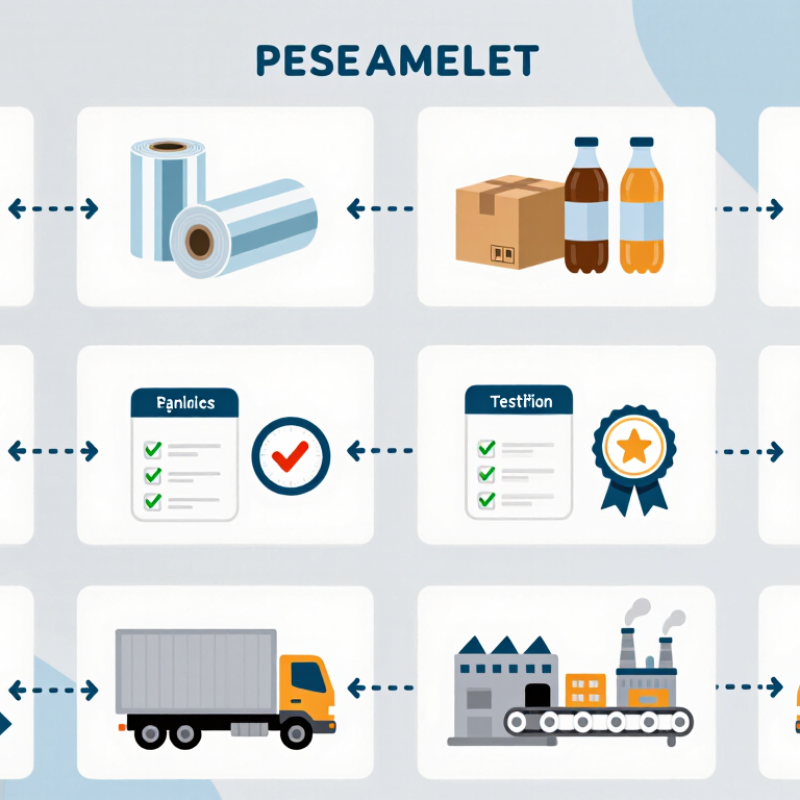
10 Best PE Shrink Film Suppliers for Global Buyers

PE Shrink Film: Definition, Uses, and Key Performance Features

PE Shrink Film: Definition, Uses, and Key Performance Features

PE shrink film is a polyethylene packaging material that tightens around products when controlled heat is applied. It forms a protective, transparent layer around cartons, trays, bundles, and irregular loads. Unlike rigid packaging, PE film follows product contours and can reduce empty space during transport. Global buyers often select it for beverage multipacks, construction materials, household goods, and warehouse bundling.

Its performance depends on more than thickness. Important factors include tensile strength, puncture resistance, tear strength, shrink ratio, sealing quality, and load retention. A thicker film is not always stronger. Resin selection, extrusion control, and film structure also affect results. Clear film supports product visibility, while printed or tinted options can improve identification when properly specified. Compatibility with sealing equipment matters too.

Practical testing is essential. Buyers should request samples and measure film performance on their actual machines, products, and packing speeds. Check thickness tolerance, roll length, seal integrity, and shrink consistency. Storage conditions also deserve attention, since heat and sunlight may weaken unused rolls. A common mistake is judging film by appearance alone. It may look smooth but fail around sharp corners. Another concern is sustainability: recyclable design helps, but local collection and processing capacity must be verified. Some specifications still need revision after real shipping trials.
How to Evaluate PE Shrink Film Suppliers for Global Purchasing

When evaluating PE shrink film suppliers for global purchasing, start with measurable performance, not attractive samples. Request tensile strength, elongation, dart impact, sealing range, shrinkage, haze, and coefficient of friction data. Test samples on your actual wrapping equipment. Film that performs well in a laboratory may wrinkle on a high-speed line. Ask for recent certificates, batch records, and lot traceability. ISO 9001 certification can support process control, but it cannot replace independent testing.

Supply reliability needs equal attention. Compare monthly capacity, resin sources, backup production lines, lead times, and export packaging. Request at least three recent certificates of analysis. Check whether thickness variation stays within the agreed tolerance. A small deviation can increase film consumption and cause uneven seals. PlasticsEurope reported that packaging represented 39.6% of European plastics demand in 2022. This scale makes material efficiency commercially important. It also makes vague sustainability claims risky.

Environmental data should be specific. The OECD’s Global Plastics Outlook reported that packaging generated about 40% of global plastic waste in 2019. Ask suppliers for recycled-content evidence, energy data, and clear end-of-life guidance. Verify claims through recognized documentation rather than marketing language. Evaluate total landed cost, including freight, duties, rejected rolls, and line downtime. No scorecard is perfect. A supplier may pass every document review yet fail during humid storage or winter transport. Build a pilot order, define acceptance limits, and record what went wrong. That uncomfortable record often reveals more than a polished factory tour.

10 Best PE Shrink Film Suppliers for Global Buyers – How to Evaluate PE Shrink Film Suppliers for Global Purchasing

Supplier Profile Primary Supply Region Film Structure Typical Thickness Maximum Film Width Production Capacity Common Applications Minimum Order Quantity Typical Lead Time Quality Documentation Export Readiness Evaluation Score
Supplier Profile 01 East Asia LDPE / LLDPE co-extruded film 40–180 microns 8,000 mm 2,500–4,000 metric tons/month Building materials, pallet wrapping, industrial products 1 metric ton 15–25 days COA, technical data sheet, batch traceability Strong 9.2 / 10
Supplier Profile 02 Southeast Asia Virgin LLDPE shrink film 50–200 microns 6,500 mm 1,500–2,500 metric tons/month Furniture, insulation panels, household products 2 metric tons 20–30 days COA, dimensional inspection report, RoHS declaration Strong 8.9 / 10
Supplier Profile 03 South Asia Recycled-content PE shrink film 60–250 microns 5,500 mm 800–1,500 metric tons/month Secondary packaging and non-food industrial goods 3 metric tons 25–40 days Recycled-content declaration, COA, tensile test data Good 8.4 / 10
Supplier Profile 04 Western Europe High-clarity LDPE / LLDPE film 40–150 microns 7,000 mm 1,000–2,000 metric tons/month Retail packs, construction products, display packaging 1 metric ton 20–35 days COA, REACH declaration, food-contact documentation when applicable Very strong 9.1 / 10
Supplier Profile 05 North America Heavy-duty co-extruded PE film 100–300 microns 7,600 mm 1,200–2,200 metric tons/month Machinery, steel products, oversized loads 5 metric tons 30–45 days COA, puncture resistance data, weld-strength report Strong 8.8 / 10
Supplier Profile 06 Middle East Standard LDPE shrink film 50–220 microns 6,000 mm 1,000–1,800 metric tons/month Bricks, tiles, pipes, and general industrial packaging 2 metric tons 20–35 days COA, thickness profile, packing list, certificate of origin Good 8.1 / 10
Supplier Profile 07 Eastern Europe LLDPE blown film with optional UV stabilization 60–250 microns 5,000 mm 700–1,400 metric tons/month Agricultural goods, timber, and construction materials 2 metric tons 25–40 days COA, UV-resistance data, technical data sheet Good 8.3 / 10
Supplier Profile 08 Latin America Recycled and virgin PE blend 70–250 microns 4,800 mm 600–1,200 metric tons/month Local and regional palletized shipments 3 metric tons 30–45 days COA, recycled-content statement, visual inspection report Good 7.9 / 10
Supplier Profile 09 Southern Europe High-strength PE shrink film 50–180 microns 6,800 mm 900–1,700 metric tons/month Beverage multipacks, cartons, and consumer goods 1.5 metric tons 20–35 days COA, tensile and elongation data, REACH declaration Very strong 8.7 / 10
Supplier Profile 10 East Africa General-purpose LDPE film 60–200 microns 4,000 mm 400–900 metric tons/month Agricultural products, local manufacturing, and logistics 5 metric tons 35–50 days COA, basic dimensional report, certificate of origin Developing 7.5 / 10

Evaluation criteria include material consistency, available specifications, production capacity, minimum order quantity, lead time, documentation, export capability, and suitability for international purchasing. Final specifications should be confirmed through samples, technical data sheets, certificates, and pre-shipment inspection.

Top 10 PE Shrink Film Suppliers and Their Market Strengths

The top ten PE shrink film suppliers serve different buying priorities. One leads in high-clarity film for food trays and retail packs. Another focuses on heavy-duty film for pallets, cartons, and warehouse transport. A third supplier is known for consistent thickness, helping machines run with fewer breaks.

Several suppliers compete through recycled-content options and lower-energy production lines. Others offer custom widths, printed film, or rapid regional delivery. One specializes in small trial orders, which helps new buyers test sealing performance before committing. Another provides technical support for tunnel temperature, conveyor speed, and film tension.

Operational reliability separates strong suppliers from attractive quotations. Buyers should examine batch records, core dimensions, puncture resistance, and sealing results. Ask for samples from more than one production lot. The best suppliers explain limits clearly, rather than promising universal performance. That matters.

A supplier with global warehouses may reduce delays, while a smaller converter may offer faster customization. Some provide detailed certificates and traceability documents. Others have impressive machinery but weaker communication. No ranking is perfect. Market strength can change with resin costs, shipping capacity, and regional demand. I would compare landed cost, not only the roll price, and record every test result before selecting a long-term partner.

International Standards, Certifications, and Quality Checks

Global PE shrink film buyers need more than a low quotation. They need verifiable standards, repeatable testing, and clear traceability. ISO 9001 certification shows that a supplier controls documented processes, but it does not guarantee perfect film. Every production batch still needs inspection.

A practical quality check should record thickness, width, tensile strength, elongation, shrink percentage, haze, and seal performance. ASTM D882 supports tensile testing, while ASTM D1894 helps evaluate film friction. Samples should be tested across the roll, not only near the core. Small variations can cause loose packs, torn corners, or unstable sealing. That detail is easy to miss.

Certification must match the application. Food-contact projects require applicable regional compliance documents and migration testing. Recycled-content claims need evidence, not attractive wording. ISO 14001 can indicate environmental management, while chain-of-custody records clarify material origin. The OECD Global Plastics Outlook reported that packaging created about 40% of global plastic waste in 2019, increasing pressure for measurable material efficiency. PlasticsEurope’s Plastics—the Fast Facts 2024 report also shows packaging remains the largest plastics-use sector in Europe. Less waste matters.

During supplier audits, buyers should request recent certificates, test methods, calibration records, and retained samples. Ask for corrective-action reports too. Mistakes happen. A supplier that hides them is more concerning than one that documents and fixes them. An independent laboratory can verify critical results before long-term contracts begin. Supplier performance should be reviewed after shipment, because laboratory samples cannot reveal every real-world problem.

Pricing, Logistics, and Supplier Selection Considerations

Selecting among the 10 best PE shrink film suppliers requires more than comparing price per kilogram. Film thickness, roll width, shrink ratio, clarity, and seal strength can change the real cost. Ask for a detailed quotation with resin grade, core size, packaging method, and production tolerance. Small differences matter.

Logistics can erase an attractive price. Confirm the supplier’s loading plan, monthly capacity, lead time, and export documentation. A container may hold fewer rolls than expected because of roll diameter or pallet design. Request carton dimensions and a loading calculation before payment. Also check whether the supplier can provide consistent batches, inspection reports, and samples from current production.

Supplier selection should include practical testing. Run the film on your actual packaging line, not only on a sample table. Measure puncture resistance, shrink performance, and seal appearance at operating speed. Ask how claims are handled when thickness varies or rolls arrive damaged. A low quote is not always economical. I once treated freight as a minor detail; that assumption was weak. Pricing can also change with resin markets, order volume, payment terms, and custom printing requirements. Keep these variables visible in a comparison sheet, and leave room for quality checks before large-scale purchasing.