inquiry
Leave Your Message

How to Choose the Best Packaging Film for Your Products?

Choosing the right Packaging Film can determine whether a product arrives fresh, intact, and ready for sale. A film that looks suitable on a sample roll may fail during transport. Edges can split. Seals can wrinkle. Moisture can cloud the package.

The decision should begin with the product, not the film supplier’s brochure. Consider moisture, oxygen, light, temperature, weight, and handling conditions. Fresh produce may need breathability, while roasted coffee often needs strong aroma and oxygen protection. Frozen foods require flexibility at low temperatures. Sharp or heavy items may demand puncture resistance. Real packaging trials matter. Test filled packs on production equipment, then inspect them after stacking, vibration, and temperature changes.

Material structure also deserves careful review. Polyethylene, polypropylene, polyester, and multilayer films offer different balances of strength, clarity, barrier performance, and sealability. A packaging engineer or qualified supplier can help match these properties with the product and machinery. Technical data should support the choice, including thickness, tensile strength, seal range, and barrier values.

Do not ignore sustainability. Lower material use can reduce waste, but a thinner film may create more damaged products. That trade-off needs measurement, not optimism. Recycling claims also require verification against local collection systems and current packaging requirements. I have seen attractive packaging concepts perform poorly because testing started too late. A reliable choice combines laboratory results, line experience, supplier documentation, and honest review of failures. The best film is not always the strongest or cheapest. It is the one that protects the product consistently, runs efficiently, and fits its real end-of-life conditions.
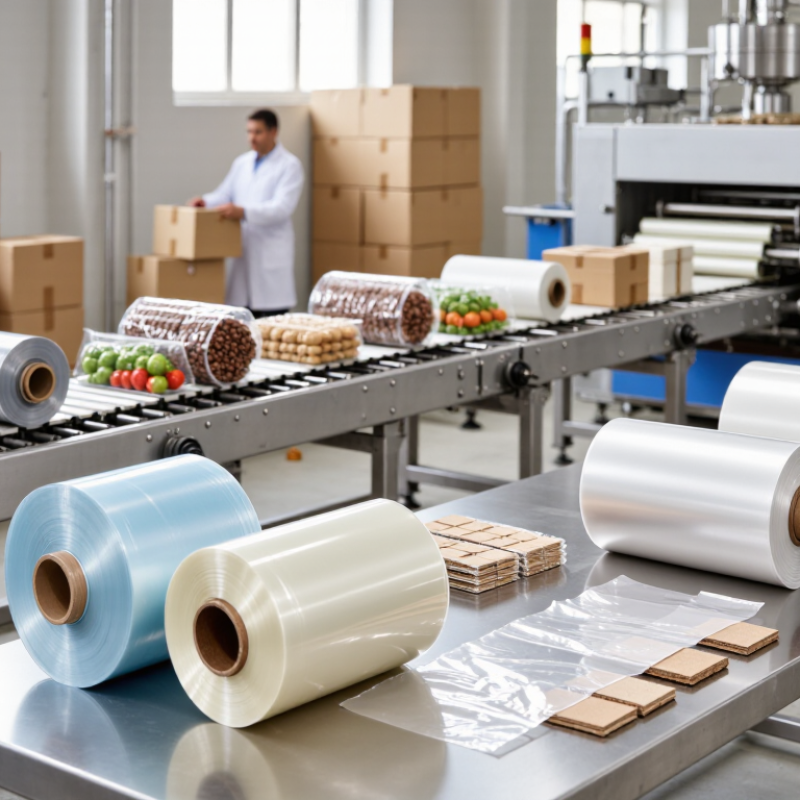
How to Choose the Best Packaging Film for Your Products?

Define Your Product’s Packaging Requirements

Define Your Product’s Packaging Requirements

The best packaging film begins with the product, not the film catalog. Define what the product needs during filling, transport, storage, and opening. Moisture-sensitive foods may require strong water-vapor resistance. Products exposed to oxygen need reliable oxygen-barrier performance. Light-sensitive contents may need an opaque or metallized structure.

Consider temperature, puncture risk, seal strength, and filling speed. A laboratory barrier value can change after flexing, printing, or sealing. That detail is easy to miss. Packaging trials should test the complete structure, not only one film layer. OECD’s Global Plastics Outlook reports that packaging creates about 40% of global plastic waste. This makes material reduction and realistic end-of-life planning important requirements, not optional upgrades.

Tips: Write a requirement sheet before contacting suppliers. Include product sensitivity, shelf-life target, pack size, seal temperature, and distribution conditions. Ask for test methods and recent performance data. Check whether the film works on your existing equipment. A recyclable claim may fail if the structure contains incompatible layers or lacks local collection systems. Review the decision with quality, production, and logistics teams. Their feedback can reveal practical weaknesses early. Do not choose the thinnest film automatically. A small downgrade in durability may cause leakage, waste, and higher costs.
Compare Packaging Film Materials and Their Key Properties

How to Choose the Best Packaging Film for Your Products?

Compare Packaging Film Materials and Their Key Properties

Choosing packaging film starts with the product, not the film catalog. I assess moisture, oxygen, light, temperature, and sealing needs first. Fresh produce often needs controlled breathability, while powdered foods require strong moisture protection. Film thickness also affects puncture resistance, flexibility, and material use.

Polyethylene offers good sealability and flexibility. It works well for bags and inner layers.

Polypropylene usually provides higher stiffness and better heat resistance.

Polyethylene terephthalate adds strength and dimensional stability, making it useful for printed outer layers.

Polyamide resists punctures, but it can absorb moisture and change performance.

Ethylene vinyl alcohol provides strong oxygen protection, although humidity can reduce its barrier effect.

Multilayer films combine these properties in a practical structure. One layer may seal, another may block oxygen, and a third may protect against abrasion. I recommend testing the complete package under real storage conditions. A film that performs well in a dry laboratory may fail beside a freezer or hot warehouse. Seal temperature, line speed, and filling pressure also matter. Small wrinkles can create leakage paths. It feels simple. Not always.

I have seen teams choose the thickest film for confidence, then discover poor sealing and unnecessary material use. That mistake deserves review. Compare barrier data, seal strength, puncture results, and end-use conditions together. A clear specification prevents attractive but unsuitable choices.

Match Film Performance to Product Protection Needs

Choosing packaging film starts with the product, not the film catalog. A soft bakery item may need oxygen control, while fresh produce often needs moisture balance and ventilation. Powdered goods require strong seals and resistance to fine particles. The film must protect against the risks your product actually faces.

I have seen teams select a film because it feels thick and durable. That choice can fail. Thickness alone does not guarantee puncture resistance, seal strength, or barrier performance. Measure exposure to oxygen, moisture, light, heat, and handling. Then match those risks with suitable film properties. A simple drop test can reveal weak corners. Seal tests can expose problems before production.

Do not overlook the filling environment. A film that performs well in a clean warehouse may struggle on a fast packing line. Check sealing temperature, machine speed, friction, and storage conditions. Ask suppliers for technical data and independent test methods. Small trials using real products are more useful than assumptions. I once focused too heavily on barrier data and underestimated poor seal alignment. That mistake was preventable. Film selection also affects recyclability, print quality, and package weight, so protection should be balanced with practical processing and environmental goals.

How to Choose the Best Packaging Film for Your Products? - Match Film Performance to Product Protection Needs

Film Type Key Protection Strengths Moisture Barrier Oxygen and Aroma Barrier Mechanical Performance Typical Heat-Sealing Behavior Recommended Product Applications Important Limitations
LDPE / LLDPE Flexible packaging, good moisture resistance, strong seal integrity, and good film toughness. Very good Low to moderate Good puncture resistance and flexibility; LLDPE generally provides higher toughness than conventional LDPE. Low-temperature sealing; suitable for high-speed packaging lines. Frozen foods, fresh produce, bakery bags, liners, pouches, and general-purpose overwrap. Not suitable alone when high oxygen, aroma, or light protection is required.
HDPE High stiffness, good moisture barrier, and strong resistance to many chemicals. Very good Low to moderate Stiffer and more rigid than LDPE; good tensile strength but can be less flexible. Heat-sealable in suitable grades; sealing window depends on formulation and thickness. Grocery bags, produce packaging, liners, industrial sacks, and moisture-sensitive dry goods. Limited oxygen and aroma barrier; reduced clarity compared with many transparent films.
BOPP High clarity, gloss, stiffness, printability, and good resistance to moisture transmission. Good Low to moderate Good tensile strength and stiffness; may require a sealant layer for reliable heat sealing. Sealable grades are available; sealing performance varies by coating and structure. Snack foods, confectionery, labels, bakery products, and printed flow-wrap packaging. Poorer puncture resistance than tougher polyolefin structures; oxygen barrier is normally insufficient for sensitive foods.
CPP Excellent heat-sealing, good clarity, and strong resistance to flex cracking. Good Low to moderate Good seal strength and flexibility; generally less stiff than BOPP. Wide sealing capability and good hot-tack performance in appropriate grades. Retortable structures, snack packaging, bakery packaging, and sealant layers in laminates. Limited oxygen and aroma barrier when used as a single layer; standard grades have limited high-temperature resistance.
PET / BOPET High stiffness, dimensional stability, clarity, printability, and resistance to elevated temperatures. Good Moderate Excellent tensile strength and dimensional stability; good resistance to handling and abrasion. Usually used as a non-sealing outer layer unless coated or laminated with a sealant film. Coffee packs, stand-up pouches, high-quality printed laminates, and products requiring strong graphics. Brittle compared with PE; typically requires a separate heat-sealing layer.
PA / Nylon Very high puncture, tear, abrasion, and impact resistance. Moderate to low Moderate Excellent toughness; maintains performance in demanding vacuum and handling conditions. Usually laminated with PE or CPP to provide dependable heat sealing. Meat, seafood, cheese, retort pouches, and products with sharp or heavy contents. Absorbs moisture, which can affect dimensional stability and barrier performance; not ideal as a standalone moisture-barrier film.
EVOH-Based Multilayer Film Very high oxygen and aroma barrier when protected from moisture by compatible outer layers. Depends on outer layers Excellent when dry and properly protected Mechanical strength depends on the PE, PA, or other supporting layers in the structure. The sealing layer is generally PE or another compatible polymer; sealing must be validated for the complete structure. Fresh meat, dairy products, sauces, medical packaging, and oxygen-sensitive foods. Moisture can significantly reduce EVOH oxygen-barrier performance; multilayer construction may complicate recycling.
Metallized Film High light, oxygen, aroma, and moisture protection with a reflective appearance. Very good Very good to excellent Mechanical properties depend on the base film, such as PET or BOPP; metallization can be damaged by severe flexing. Normally laminated with a heat-sealable film such as PE or CPP. Coffee, powdered foods, chips, pet food, confectionery, and light-sensitive products. Not transparent; barrier can decline after excessive flexing, scoring, or abrasion.
PLA Bio-based option with good clarity and stiffness for selected packaging formats. Moderate Moderate Good stiffness and clarity but generally lower heat resistance and impact toughness than many conventional films. Heat-sealing is possible with suitable grades or coatings; process conditions require careful validation. Dry foods, produce bags, labels, and applications supported by suitable industrial composting systems. Industrial compostability depends on local facilities and certification; limited heat and moisture resistance in some grades.
Selection note: Actual barrier values depend on resin grade, film thickness, orientation, coating, humidity, temperature, and multilayer structure. Validate oxygen transmission rate, water vapor transmission rate, seal strength, puncture resistance, and end-of-life requirements using the final package design and intended storage conditions.

Evaluate Processing, Sustainability, and Cost Factors

Choosing the best packaging film requires more than comparing price per kilogram. Processing performance comes first. Check sealing temperature, puncture resistance, stiffness, and friction on your actual equipment. A film that runs smoothly can reduce scrap, stoppages, and rejected packs. The Flexible Packaging Association reported that flexible packaging represented about 21% of the U.S. packaging market by value in 2023. Its light weight is valuable, but only when the line can handle it consistently.

Tips: Request a machine trial. Measure scrap rates. Record seal failures. Test the filled pack, not only the empty film. Include transport damage in the calculation.

Sustainability needs careful judgment. The OECD’s Global Plastics Outlook reported that only 9% of global plastic waste was recycled in 2019. A recyclable structure is not automatically recycled. Local collection and sorting systems matter. Mono-material films may simplify recovery, while barrier layers can protect food and reduce product waste. That trade-off deserves testing. I would also question impressive claims without third-party evidence or clear measurement boundaries.

Cost should include film, energy, labor, downtime, freight, and disposal. Lightweighting may lower material use, yet an overly thin film can create leaks and customer complaints. The cheapest roll is not always the lowest-cost option. Build a scorecard with processing, carbon impact, recycled content, shelf life, and end-of-life options. Leave room for uncertainty. Real factories are less tidy than spreadsheets.

Select and Validate the Best Packaging Film Option

Choosing packaging film starts with the product, not the film catalog. Identify moisture, oxygen, light, grease, and aroma risks. Check filling temperature and sealing conditions. A beautiful film is useless if seals split during packing. It happens.

Ask suppliers for technical data, but treat it as a starting point. Compare thickness, barrier values, stiffness, puncture resistance, and print performance. Confirm applicable product-contact and recycling requirements. Match these results with your equipment. A strong film may run poorly on an older sealer. Record settings, line speed, and reject rates during trials.

Validation should use real products and realistic distribution conditions. Pack samples during normal production. Test seal strength, leaks, drops, compression, and appearance. Include warm, cold, and humid storage when relevant. Test after aging, not only on day one. Small details matter. Inspect corners and seal edges closely. Review results with production, quality, and logistics teams. Their experience can reveal failures that laboratory tests miss. Do not approve a film after one successful run. Repeat trials across shifts and material lots. Keep samples, photographs, measurements, and signed acceptance criteria. If results conflict, investigate before choosing the lowest price. I have seen a promising option fail because operators needed a narrower temperature range. That mistake was avoidable, but not obvious. Revisit the decision when the product, machine, or shipping route changes.